
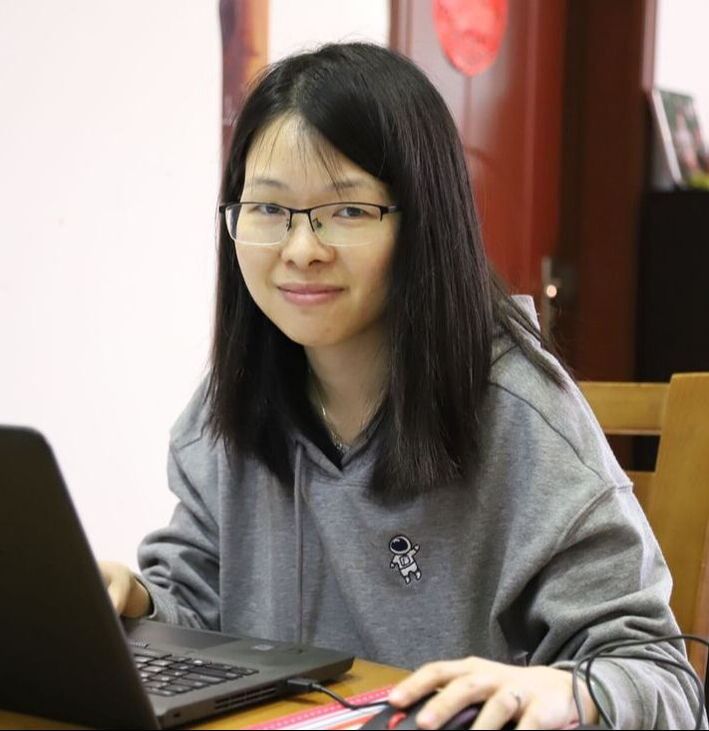
Huina Zheng, who holds a Distinction M.A. in English Studies, began her journey in literature during her studies at the Emory Creative Writing Certificate program, where she published two stories. This early success in her writing career led to her continuous exploration and evolution in various literary forms, including micro prose, flash fiction, flash nonfiction, short stories, and creative nonfiction.
Following her achievements in creative writing, Huina also established herself as an editor at Bewildering Stories. Her literary works have been featured in notable publications such as the Baltimore Review, Variant Literature, and the Midway Journal. She has received recognition in the literary field with two nominations each for both the Pushcart Prize and Best of the Net.
In addition to her literary pursuits, Huina has been a college essay coach for over a decade, bringing her vast experience to guide students in enhancing their writing skills and crafting compelling application essays. Her role as an educator is complemented by her passion for reading both Chinese and English literature, which inspires her to write original works in English conveying Chinese stories to an international audience.
Currently, Huina is furthering her writing expertise through the Stanford Continuing Studies’ two-year online novel writing certificate program, aspiring to complete her debut novel. She is also working on a collection of short stories, with her story “Ghost Children” receiving nominations for the Pushcart Prize and Best of the Net.
Residing in Guangzhou, China, with her husband and daughter, Huina continues her journey in literature and education, enriching the world of college essay coaching with her extensive experience and contributing to the literary community.
Want to read more?
Check out these other stories...
Interview with Huina Zheng
about her story "Not Firecrackers"
Honorable Mention for The Scribes Prize 2025
What inspired this piece?
One afternoon, while riding my scooter to pick up my daughter from school, I saw a crowd gathered on the roadside. For a moment I wanted to stop and see what had happened, but then I thought of my daughter waiting for me and kept going. When she saw me, her smile made everything outside seem distant and small. I realized that no matter how chaotic the world becomes, the warmth of family can restore calm and faith. That moment inspired “Not Firecrackers,” where the narrator witnesses violence in a hospital yet keeps walking toward Grandma, whose blissful unawareness contrasts sharply with the chaos outside.
What draws you to the micro-fiction format?
When I first read a 100-word micro-fiction, I was amazed by how such brevity could still hold a complete story with conflict, rhythm, and lingering resonance. Writing in this format demands precision: every word must carry weight, and nothing unnecessary can remain. It has taught me to write with focus and restraint, leaving only what truly matters.
If you could continue writing your story after these 100 words, what would happen next?
If I continued the story, I would preserve its tension and silence. The beauty of the ending lies in Grandma mistaking violence for celebration, a fragile shield of memory. In a longer version, the granddaughter might recall the violence once hidden at home, and how Grandma had taught her to survive by rewriting pain into another story, as if building a parallel world. When she leaves the hospital, she chooses silence, not out of ignorance, but as an act of love and protection.
What's next on the horizon for you?
I’m working on a novel. I finished a first draft last year but eventually set it aside to rethink the structure and characters. Now, based on that story, I’m developing a completely new version, which I plan to revise next year. If possible, I hope to query literary agents and seek publication in the future.
One afternoon, while riding my scooter to pick up my daughter from school, I saw a crowd gathered on the roadside. For a moment I wanted to stop and see what had happened, but then I thought of my daughter waiting for me and kept going. When she saw me, her smile made everything outside seem distant and small. I realized that no matter how chaotic the world becomes, the warmth of family can restore calm and faith. That moment inspired “Not Firecrackers,” where the narrator witnesses violence in a hospital yet keeps walking toward Grandma, whose blissful unawareness contrasts sharply with the chaos outside.
What draws you to the micro-fiction format?
When I first read a 100-word micro-fiction, I was amazed by how such brevity could still hold a complete story with conflict, rhythm, and lingering resonance. Writing in this format demands precision: every word must carry weight, and nothing unnecessary can remain. It has taught me to write with focus and restraint, leaving only what truly matters.
If you could continue writing your story after these 100 words, what would happen next?
If I continued the story, I would preserve its tension and silence. The beauty of the ending lies in Grandma mistaking violence for celebration, a fragile shield of memory. In a longer version, the granddaughter might recall the violence once hidden at home, and how Grandma had taught her to survive by rewriting pain into another story, as if building a parallel world. When she leaves the hospital, she chooses silence, not out of ignorance, but as an act of love and protection.
What's next on the horizon for you?
I’m working on a novel. I finished a first draft last year but eventually set it aside to rethink the structure and characters. Now, based on that story, I’m developing a completely new version, which I plan to revise next year. If possible, I hope to query literary agents and seek publication in the future.